
Basking Blue Sharks Yorkshire Coast
Table of Contents
Basking Blue Sharks Yorkshire Coast
Basking Blue Sharks Yorkshire Coast
Basking Sharks, Blue Sharks and Other Rare Visitors to the Yorkshire Coast
The waters off the Yorkshire coast often look calm and familiar, especially on a clear day. For most of us, the North Sea is associated with fishing boats, seabirds, and the occasional seal popping its head above the surface. What many people don’t realise is that, from time to time, much rarer visitors quietly pass through these waters.
Around places like Flamborough Head and the wider Yorkshire coastline, there have been occasional sightings of sharks and other unusual marine creatures. These encounters are rare, often fleeting, and almost always harmless – but they add another layer of fascination to this stretch of coast.
The basking shark – a gentle giant. Basking Blue Sharks Yorkshire Coast
The most famous rare visitor is the basking shark. Despite its enormous size, this is one of the least threatening creatures you could ever encounter.
Basking sharks are the second-largest fish in the world, growing to seven meters long. They feed entirely on plankton, filtering tiny organisms from the water as they slowly cruise along near the surface with their mouths wide open.
On very rare occasions, basking sharks have been spotted off the Yorkshire coast, usually during warmer months when plankton levels are high. Sightings tend to be brief, often from boats or coastal vantage points, and they can easily be missed if you’re not looking carefully.
Despite their size, basking sharks are gentle, slow-moving animals that pose no danger to people. Seeing one is a genuine privilege and a reminder of how little of the sea’s life we normally get to witness.
Blue sharks – elegant and misunderstood
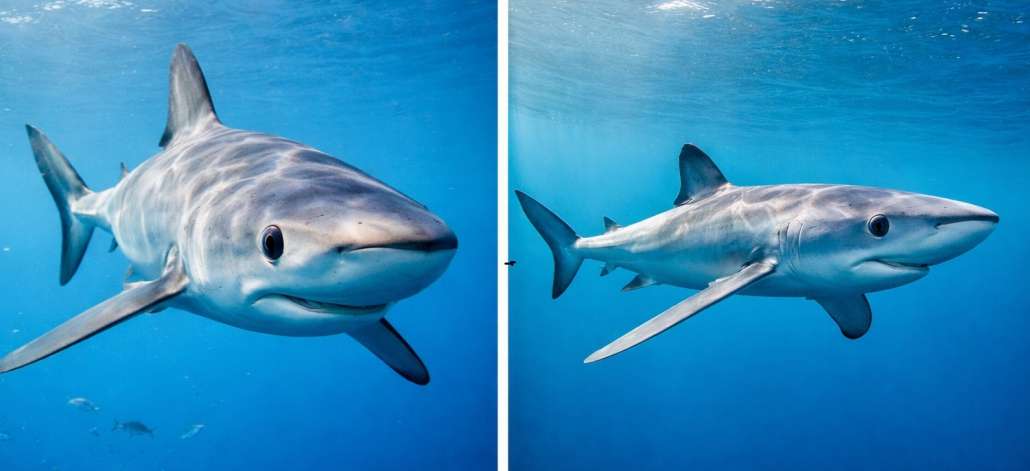
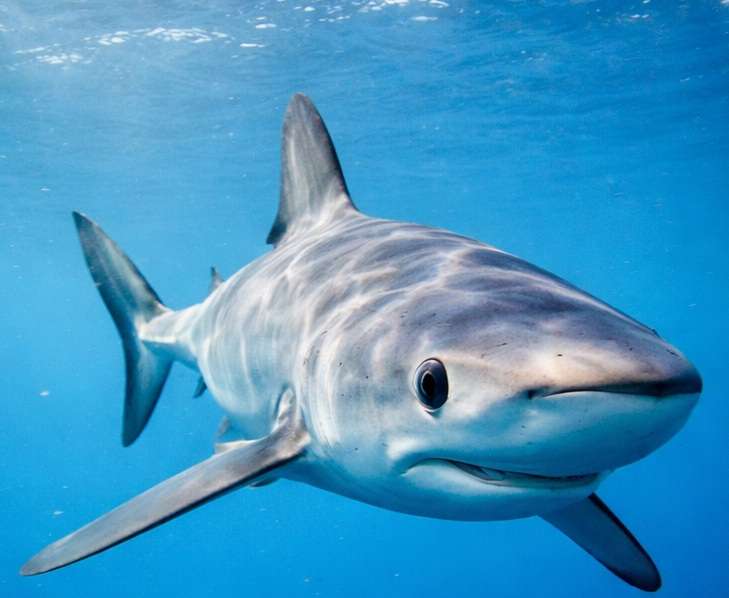
The blue shark is another occasional visitor to British waters. Sleek, fast, and beautifully coloured blue sharks are far more common in deeper offshore waters but sometimes venture closer to the UK coastline.
Sightings near Yorkshire are extremely rare, and when they do occur, it’s usually well offshore rather than close to beaches. Blue sharks are curious by nature, which has contributed to their fearsome reputation, but they are not aggressive towards humans.
Much of what people fear about sharks comes from films rather than reality. In truth, encounters between humans and sharks in UK waters are almost unheard of, and blue sharks prefer open water and smaller prey.
Other rare shark species: Basking Blue Sharks Yorkshire Coast
Occasionally, other shark species have been recorded in the North Sea, including porbeagle sharks and thresher sharks. These are powerful fish, but again, sightings are rare and usually linked to unusual conditions such as changes in water temperature or food availability.
Most records come from fishermen or scientific surveys rather than casual beachgoers. For the average visitor, these creatures remain part of the unseen world beneath the waves.
Seals are familiar yet fascinating creatures.
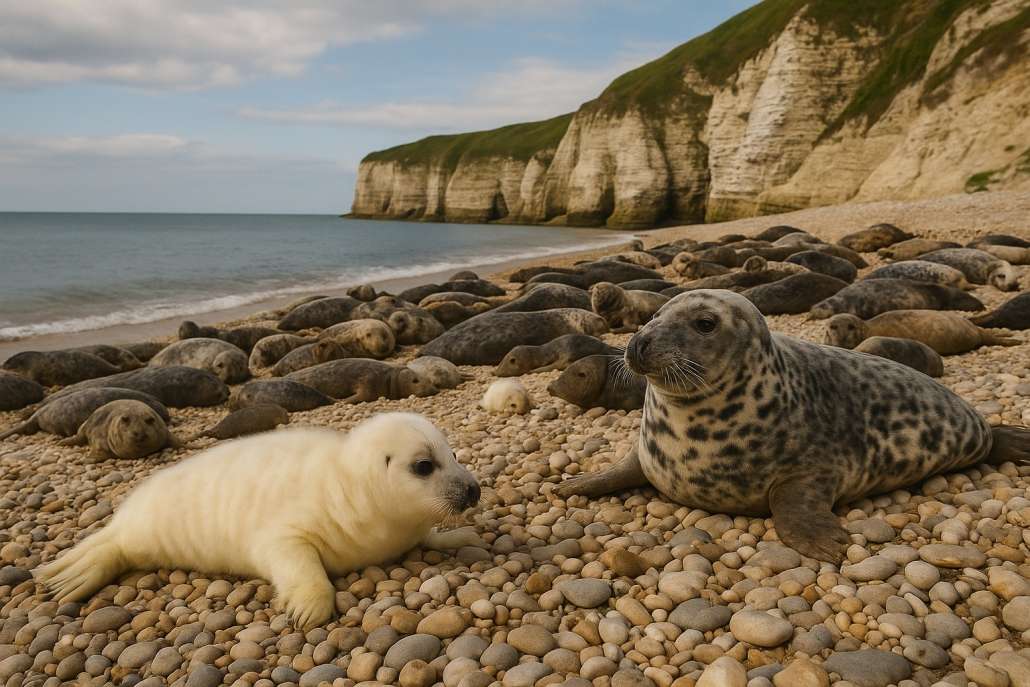
Although sharks often make headlines, seals are the marine mammals that visitors are most likely to encounter. Grey seals are regularly spotted along the Yorkshire coast, either swimming close to shore or resting on quieter beaches.
Although seals are familiar sights, they are still wild animals with strong personalities. They can appear playful and curious, but they should always be admired from a distance. Seeing seals in their natural environment is often one of the highlights of a coastal visit.
Why do these creatures appear here? Basking Blue Sharks Yorkshire Coast
The Yorkshire coast sits at an intriguing crossroads of currents and marine habitats. Changes in sea temperature, plankton blooms, and shifting fish populations can all influence where larger creatures travel.
Warmer water occasionally pushes northwards, attracting species typically found further south. Storms can also displace animals, while improved water quality in recent decades has made parts of the North Sea more attractive to marine life.
These factors combine to make rare sightings possible, even if they remain unusual.
There’s no need to be afraid – just show respect.
It’s natural for the word “shark” to cause concern, but it’s important to keep things in perspective. Sharks are not lurking near beaches, and the chances of encountering one while paddling or swimming are effectively zero.
Most shark sightings occur well offshore, and the animals involved are far more interested in feeding or moving on than interacting with people. Respect for wildlife and a calm understanding of the facts go a long way towards appreciating these animals rather than fearing them.
A coastline full of quiet surprises
One of the joys of spending time near the sea is knowing that there’s always more going on beneath the surface than we can see. The occasional appearance of a rare visitor adds to the sense of mystery and wonder that draws people back to the coast time and again.
For those staying near the Yorkshire coast, these stories are part of the area’s character – not something to worry about, but something to quietly marvel at.
The magic of the North Sea: Basking Blue Sharks Yorkshire Coast
The North Sea is often underestimated. Despite lacking tropical colours and pristine waters, the North Sea boasts depths, a rich history, and an unexpected abundance of life. From gentle giants like basking sharks to sleek travellers like blue sharks, occasional visitors remind us just how alive this ocean really is.
For anyone who enjoys nature, wildlife, and the feeling that the world is bigger than it first appears, the Yorkshire coast never disappoints.
Lucky Paws Holiday Home is a well-kept holiday caravan on the Yorkshire coast, perfectly placed for exploring Flamborough, Thornwick Bay, and the surrounding East Yorkshire coastline. Ideal for quiet breaks, coastal walks, and relaxed seaside stays
