Posts

Jellyfish on Yorkshire Coast

Jellyfish on Yorkshire Coast

Jellyfish on Yorkshire Coast
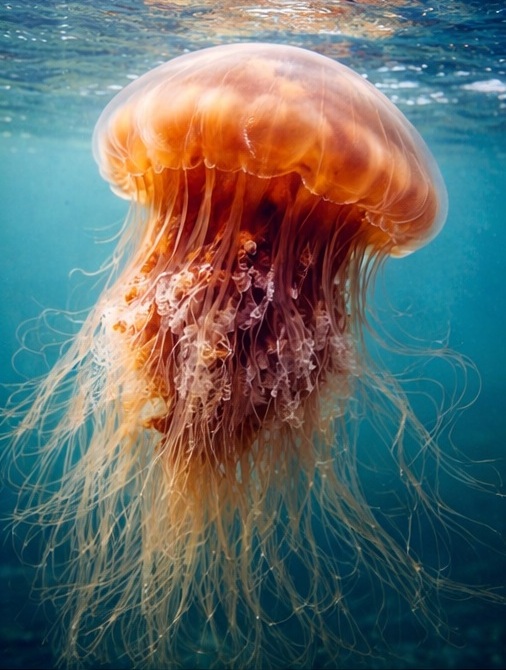
barrel jellyfish

Jellyfish on Yorkshire Coast

Jellyfish You Might See Around Bridlington (and What to Do If You Do)

Jellyfish are one of those seaside creatures that spark instant curiosity—and sometimes a bit of worry. If you don’t know what you’re looking at, spotting one in the water or on the beach can be unsettling.

Along the Yorkshire coast, and especially around Bridlington, jellyfish sightings are quite normal at certain times of year. Most are harmless, some are just fascinating to see, and all are part of the North Sea’s natural life.

Knowing which jellyfish you might see—and what to do if you come across one—makes beach trips far more relaxed and enjoyable.

Why jellyfish appear near the shore: Jellyfish on Yorkshire Coast

Jellyfish don’t swim towards beaches on purpose. They drift with currents, tides, and wind. Calm weather, warm spells, and certain tidal conditions can bring them closer to shore, where they may be spotted floating in the water or washed up on the sand.

Some years see more jellyfish than others, depending on sea temperature and food availability. Seeing them doesn’t mean the sea is dangerous — it simply means conditions are right for them to be visible.

Moon jellyfish – the most common sight

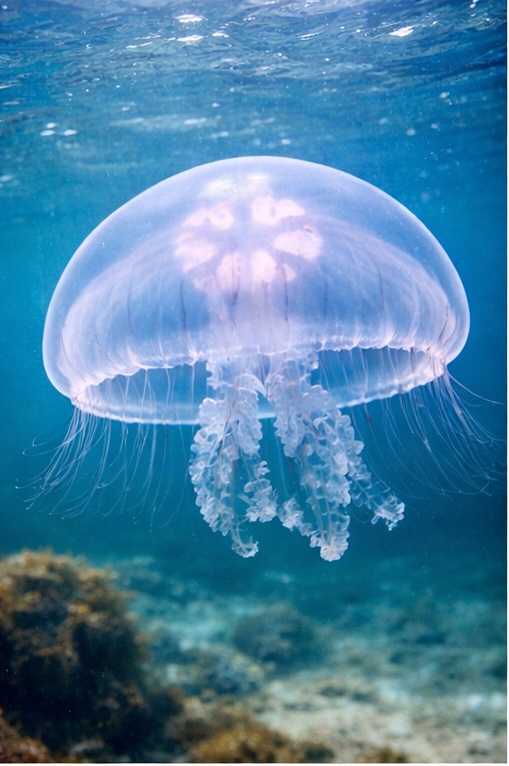
The moon jellyfish is probably the jellyfish people see most often around Bridlington. It’s easily identified by its clear, saucer-shaped body and the four faint rings visible in the centre.

Moon jellyfish are almost completely harmless. Their sting is very mild and often not felt at all. They drift slowly and are more captivating than threatening, especially when seen in clear water.
Jellyfish on Yorkshire Coast
moon jellyfish

Compass jellyfish – striking but manageable: Jellyfish on Yorkshire Coast

The compass jellyfish is more colourful, with brownish markings that resemble compass roses. It looks far more dramatic than the moon jellyfish and can give a stronger sting if touched.

That said, compass jellyfish are not aggressive. They don’t chase swimmers and will usually drift past unnoticed. Most problems only occur if someone brushes against the tentacles by accident.

Avoiding direct contact is all that’s needed.

The impressive lion’s mane jellyfish is best appreciated from a distance.

The lion’s mane jellyfish is the largest jellyfish species found in UK waters and certainly the most eye-catching. Its long trailing tentacles and reddish-brown colouring make it look intimidating.

While its sting can be painful, encounters are rare, and these jellyfish usually stay further offshore. Occasionally they wash up on beaches after storms or strong tides.

Even when washed up, their tentacles can still sting, so they should never be touched. Admiring them from a safe distance is the sensible approach.

Jellyfish on the beach – what to do: Jellyfish on Yorkshire Coast

Finding a jellyfish on the sand can be fascinating, especially for children. The key thing to remember is never to touch jellyfish, even if they look dry or lifeless.

If you come across one:

  • Keep your distance
  • Warn children not to touch it
  • Don’t poke it with sticks or hands
  • Let the tide and nature take care of it

Most jellyfish will eventually be washed back out to sea or break down naturally.

What to do if you’re stung

Jellyfish stings around the Yorkshire coast are uncommon and usually mild. If someone is stung:

  • Rinse the area with seawater, not fresh water
  • Carefully remove any tentacles using something solid (not fingers)
  • Avoid rubbing the area
  • Seek medical advice if the reaction is severe or doesn’t improve

Most stings settle quickly and are more uncomfortable than dangerous.

Why jellyfish aren’t a bad sign: Jellyfish on Yorkshire Coast

Jellyfish are often misunderstood. Their presence doesn’t mean the sea is unsafe or polluted. In fact, they’re part of a healthy marine ecosystem and have existed for millions of years.

They feed on plankton and small organisms and, in turn, are eaten by fish, turtles, and even sunfish. Their appearance is simply a reminder that the sea is full of life.

Enjoy the coast with confidence.

Understanding what you’re seeing makes all the difference. Jellyfish are not something to fear — just something to respect.

For visitors enjoying the beaches and coastline around Bridlington, knowing a little about local marine life adds interest rather than worry. Rock pools, shoreline walks, and time spent watching the sea become more engaging when you recognise what’s drifting by.

The Yorkshire coast has its surprises, but most of them are gentle ones — and jellyfish are a perfect example.

At Lucky Paws Holiday Home, we believe holidays should be unhurried and peaceful. Our caravan near Flamborough and Bridlington offers a comfortable place to unwind, enjoy coastal scenery, and experience the Yorkshire coast away from the crowds.
Harmless Sea Creatures Yorkshire Coast

Harmless Sea Creatures Yorkshire Coast

Harmless Sea Creatures Yorkshire Coast
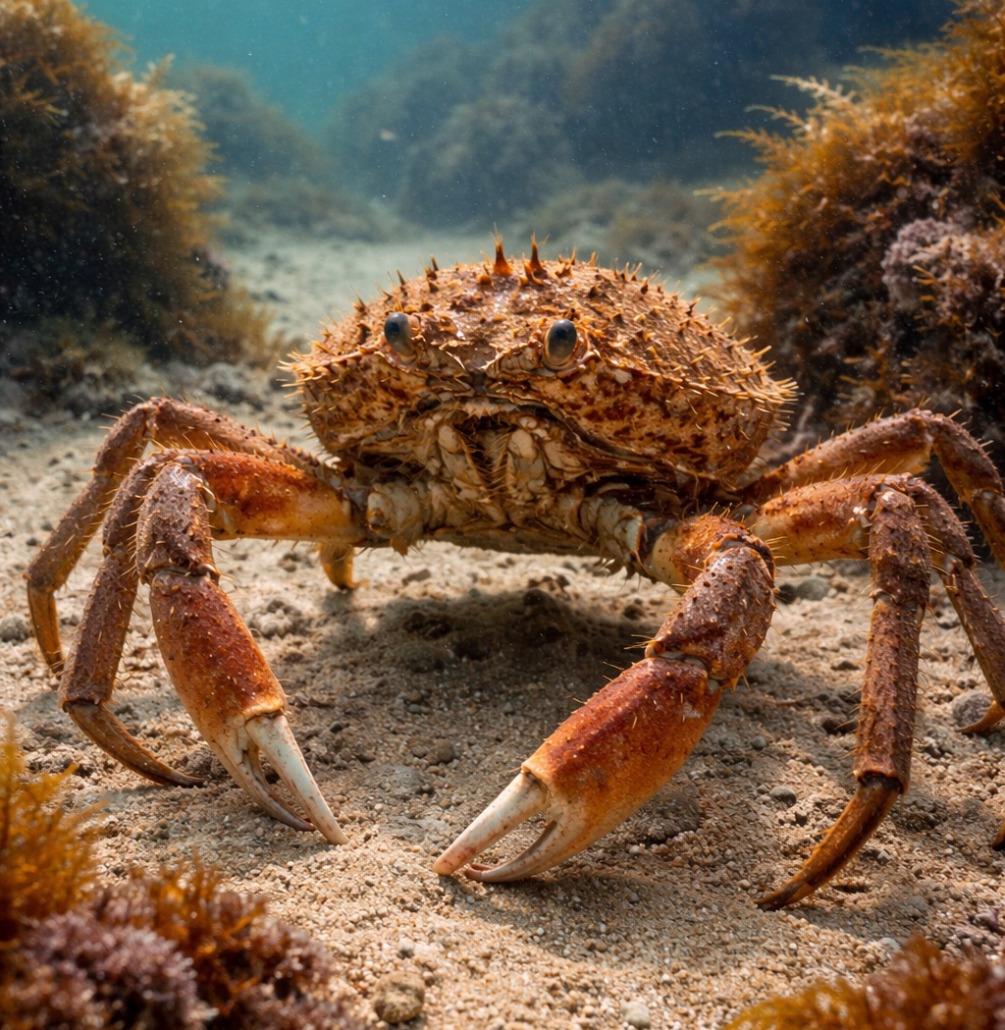
Spider crab looking for food

Harmless Sea Creatures Yorkshire Coast

Dangerous-Sounding Sea Creatures That Are Actually Harmless

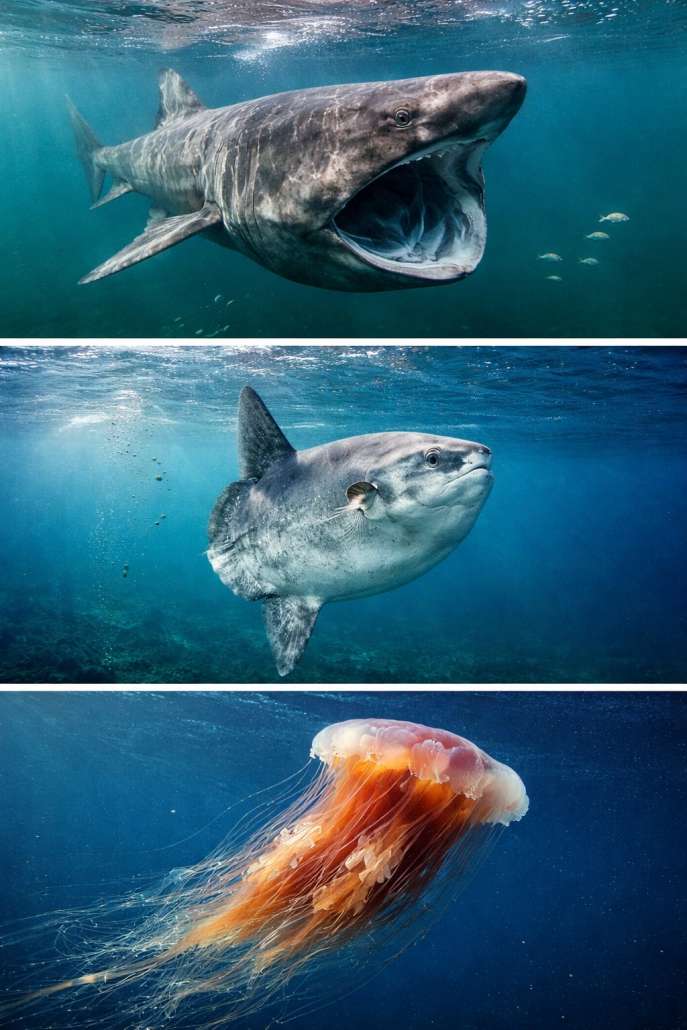
The sea has a habit of sounding far more frightening than it really is. Names like jellyfish, shark, or spider crab can easily conjure up images of danger, especially if you’re not familiar with what actually lives beneath the surface of the North Sea.

In reality, many of the creatures found off the Yorkshire coast may look dramatic or have alarming names, but pose little or no risk to people enjoying the shoreline. In fact, most are far more interested in going about their own business than interacting with humans at all.

Here’s a closer look at some of the sea creatures that often sound worrying — but really aren’t.

Jellyfish – more curious than dangerous

Jellyfish are probably the creatures that cause the most concern. Their translucent bodies and trailing tentacles can look unsettling, especially when they wash up on beaches.

The lion’s mane jellyfish, the largest jellyfish species in the world, certainly looks dramatic. With long tentacles and a flowing, mane-like appearance, it’s easy to see why people keep their distance. Although their sting can be uncomfortable, they are docile and avoid people. The sea has complete control over them because they float with the currents and tides.

Other common jellyfish, such as moon jellies, are almost entirely harmless. They have very mild stings or none at all and are more of a curiosity than a threat.

Harmless Sea Creatures Yorkshire Coast
some strange-looking sea creatures

Sharks – mostly gentle, rarely seen: Harmless Sea Creatures Yorkshire Coast

The word ‘shark’ carries a lot of baggage, largely thanks to films rather than facts. In UK waters, sharks are extremely rare close to shore and are not interested in humans.

The basking shark, occasionally spotted in the North Sea, is enormous but entirely harmless. It feeds on plankton and tiny organisms, filtering water as it swims slowly near the surface. Despite its size, it couldn’t harm a person even if it wanted to.

Other species, such as blue sharks or porbeagle sharks, tend to stay far offshore. Sightings near the Yorkshire coast are exceptional and usually involve animals simply passing through deeper waters.

Spider crabs – strange-looking but shy

Spider crabs are another creature that can look alarming at first glance. With long legs and a spiky shell, they resemble something from a science-fiction film rather than a real animal.

In truth, spider crabs are slow-moving scavengers. They pose no danger to people and will usually retreat if approached. They are often spotted in rock pools or shallow waters and sometimes decorate themselves with seaweed and shells for camouflage.

Their unusual appearance is purely a defence mechanism, not a sign of aggression.

Starfish are tough yet harmless creatures. Harmless Sea Creatures Yorkshire Coast

Starfish may not sound dangerous, but their reputation as predators of shellfish sometimes gives them a bad name. Along the Yorkshire coast, they’re a familiar sight in rock pools and on beaches after storms.

Despite their firm texture and surprising strength, starfish are completely harmless to people. They don’t bite, sting, or chase anything. Their slow, methodical movement makes them fascinating to watch, especially for children exploring the shore.

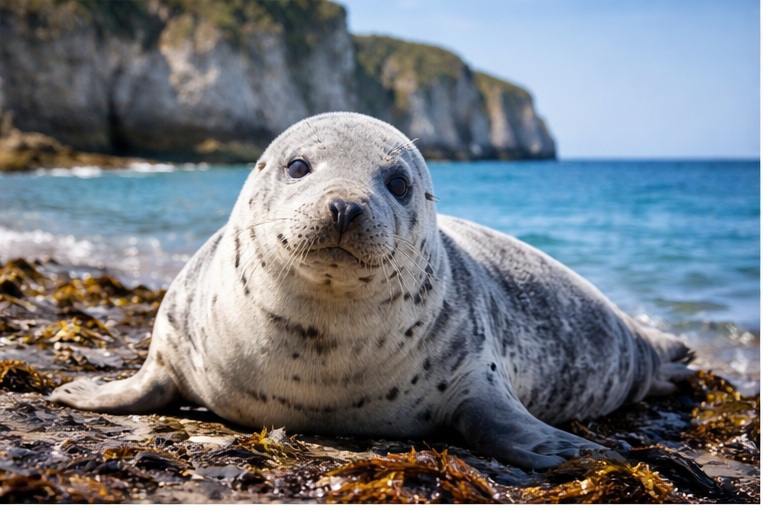
Seals—curious, not cuddly. Harmless Sea Creatures Yorkshire Coast

Seals are often mistaken for friendly sea dogs, and while they are intelligent and curious, they are still wild animals. They sometimes follow swimmers or boats out of curiosity, not aggression.

Seals are not dangerous if left alone. Problems only arise when people try to get too close, feed them, or touch them. Observed calmly from a distance, seals are one of the most enjoyable wildlife sightings along the coast.

Why these creatures sound scarier than they are

Much of the fear surrounding sea creatures comes from misunderstanding. Strange shapes, unfamiliar movements, and dramatic names can make animals seem more threatening than they really are.

The vast majority of marine life prioritises feeding, movement, and survival over interactions with humans. We are far more of a curiosity to them than they are to us.

Enjoying the sea with confidence: Harmless Sea Creatures Yorkshire Coast

Knowing a little about what lives in the sea helps replace fear with fascination. The Yorkshire coast is home to a rich variety of marine life, most of it harmless and all of it part of a balanced ecosystem.

For visitors staying near the coast, this knowledge adds to the enjoyment. Rock pools become more interesting, coastal walks more engaging, and the sea itself feels less mysterious and more welcoming.

The North Sea may look wild at times, but it’s also full of gentle surprises — and that’s part of its quiet charm.

At Lucky Paws Holiday Home, we believe holidays should be unhurried and peaceful. Our caravan near Flamborough and Bridlington offers a comfortable place to unwind, enjoy coastal scenery, and experience the Yorkshire coast away from the crowds.

Why Seals Love Flamborough

Why Seals Love Flamborough

Why Seals Love Flamborough

Why Seals Love Flamborough

Why Seals Love the Coast Around Flamborough

For many visitors to the Yorkshire coast, spotting a seal is one of those moments that turns a good day into a memorable one. Along the cliffs and bays around Flamborough, seals are a familiar but still fascinating sight, often seen bobbing in the water or resting quietly along quieter stretches of shoreline.

But why do the seals seem to favour this part of the coast so much? The answer lies in a mix of geography, food, and the natural character of the coastline itself.

A coastline shaped perfectly for seals

The coastline around Flamborough is very different from the long, flat sandy beaches found elsewhere. Here, chalk cliffs, rocky ledges, and sheltered coves create ideal conditions for seals.

These features offer:

  • Safe resting places away from heavy human activity
  • Sheltered waters where seals can conserve energy
  • Easy access to deeper water just offshore

For seals, this combination makes the area both practical and comfortable. They can haul out to rest and warm up, then slip back into deeper water when needed.

Why Seals Love Flamborough
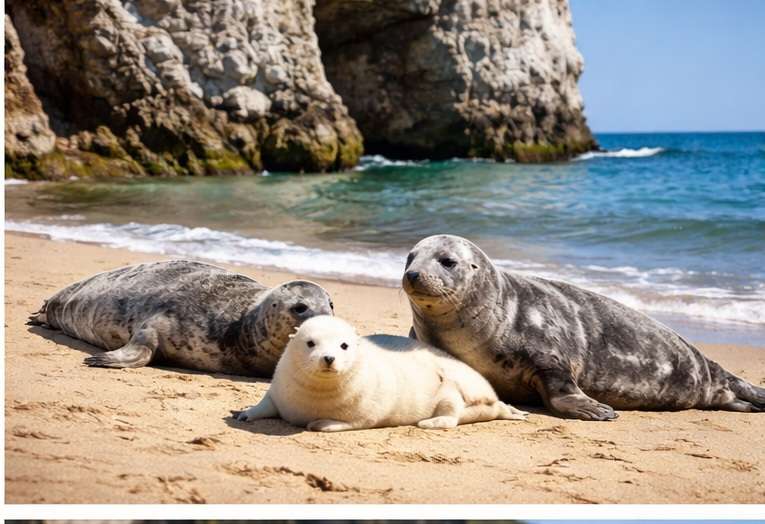
Why Seals Love Flamborough (baby with mum and dad)

Plenty of food close by: Why Seals Love Flamborough

One of the main reasons seals gather in certain areas is food availability. The waters off Flamborough are rich in fish, thanks to tidal movements and underwater features that encourage marine life to thrive.

Seals mainly feed on fish such as:

  • Cod
  • Whiting
  • Flatfish
  • Sand eels

They are skilled hunters, using their excellent eyesight and sensitive whiskers to detect movement in the water. Having reliable feeding grounds close to resting areas means seals don’t need to travel far to meet their needs.

Grey seals – the locals of the coast: Why Seals Love Flamborough

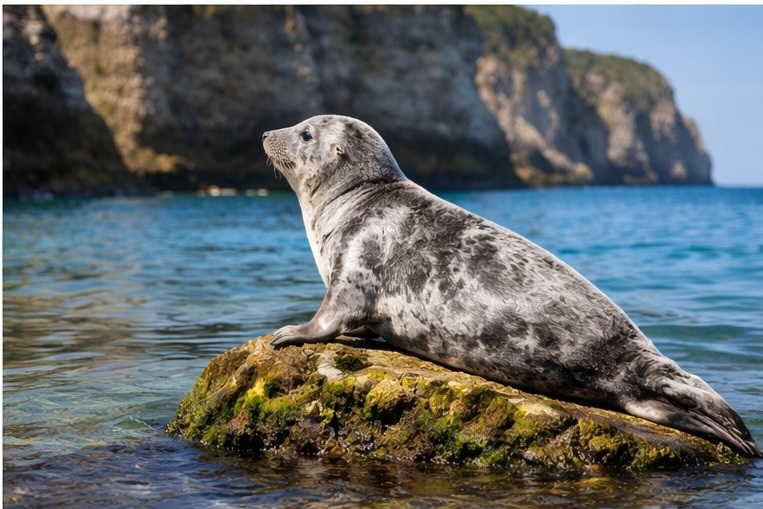
The seals most commonly seen along this stretch of the Yorkshire coast are grey seals. They are the largest seal species found in the UK and are known for their long noses and expressive faces.

Grey seals are naturally curious animals. It’s not unusual to see them watching swimmers, boats, or walkers from a short distance, their heads popping up above the surface. This curiosity is often mistaken for friendliness, but seals are still wild animals and should always be respected.

Observing them quietly from a distance allows them to behave naturally without feeling disturbed.

Why Seals Love Flamborough
seal sunbathing on a rock

Quiet corners away from crowds

Although Flamborough and nearby areas attract plenty of visitors, there are still many quieter spots along the coast. Seals tend to favour these calmer areas, particularly outside peak holiday times.

Early mornings and quieter days often offer the best chance of sightings. Calm seas and good visibility make it easier to spot seals swimming just below the surface or resting near rocky outcrops.

This balance between accessibility and quietness is one of the reasons seals continue to return year after year.

A safe place to raise young: Why Seals Love Flamborough

Seals are particularly cautious during pupping season. Although the main breeding colonies are often located elsewhere, the wider Yorkshire coast continues to offer safe routes and resting places for mothers and young seals.

Sheltered bays and less disturbed sections of coastline offer protection from rough seas and excessive disturbance. These calmer conditions are important for young seals as they develop strength and confidence in the water.

How seals cope with the North Sea

The North Sea can be a harsh environment, especially during winter. Strong winds, rough seas, and cold temperatures are common, yet seals are perfectly adapted to cope.

Their thick layers of blubber provide insulation and energy reserves, while their streamlined bodies make swimming in rough conditions efficient. Seals often appear relaxed even when the sea looks anything but calm.

Watching seals navigate these conditions is a reminder of how well adapted wildlife is to life along the coast.

When is the best time to see seals? Why Seals Love Flamborough

Seals can be seen around Flamborough throughout the year, but sightings are often more frequent during:

  • Calm weather
  • Clear conditions
  • Quieter times of day

Winter and early spring can be particularly good for sightings, as fewer people are around and seals move more freely along the coast. Summer sightings still happen, but seals may choose quieter spots away from busy beaches.

Watching seals responsibly

Seeing seals in the wild is a privilege, and it’s important to enjoy it responsibly. Keeping a respectful distance, avoiding sudden movements, and never feeding seals helps protect both people and animals.

Seals that feel threatened may retreat into the water or behave defensively, so calm observation is always best. A quiet approach ensures these encounters remain special rather than stressful.

A coastline that feels alive

One of the joys of staying near the coast is the feeling that nature is always close by. Seals are part of what gives the Flamborough area its sense of life and character.

Knowing that these animals choose to spend time here adds another layer of appreciation for the coastline. It’s not just a place to visit – it’s a living environment shared with wildlife that has thrived here for generations.

A lasting impression

For many people, their first seal sighting stays with them long after they’ve gone home. It’s a gentle reminder that even familiar places can still surprise us.

The coast around Flamborough offers that quiet magic – moments where nature carries on at its own pace, just beyond the edge of everyday life.

Lucky Paws Holiday Home is a well-kept holiday caravan on the Yorkshire coast, perfectly placed for exploring Flamborough, Thornwick Bay, and the surrounding East Yorkshire coastline. Ideal for quiet breaks, coastal walks, and relaxed seaside stays.