Jellyfish on Yorkshire Coast
Table of Contents
Jellyfish on Yorkshire Coast
Jellyfish on Yorkshire Coast
Jellyfish You Might See Around Bridlington (and What to Do If You Do)
Jellyfish are one of those seaside creatures that spark instant curiosity—and sometimes a bit of worry. If you don’t know what you’re looking at, spotting one in the water or on the beach can be unsettling.
Along the Yorkshire coast, and especially around Bridlington, jellyfish sightings are quite normal at certain times of year. Most are harmless, some are just fascinating to see, and all are part of the North Sea’s natural life.
Knowing which jellyfish you might see—and what to do if you come across one—makes beach trips far more relaxed and enjoyable.
Why jellyfish appear near the shore: Jellyfish on Yorkshire Coast
Jellyfish don’t swim towards beaches on purpose. They drift with currents, tides, and wind. Calm weather, warm spells, and certain tidal conditions can bring them closer to shore, where they may be spotted floating in the water or washed up on the sand.
Some years see more jellyfish than others, depending on sea temperature and food availability. Seeing them doesn’t mean the sea is dangerous — it simply means conditions are right for them to be visible.
Moon jellyfish – the most common sight
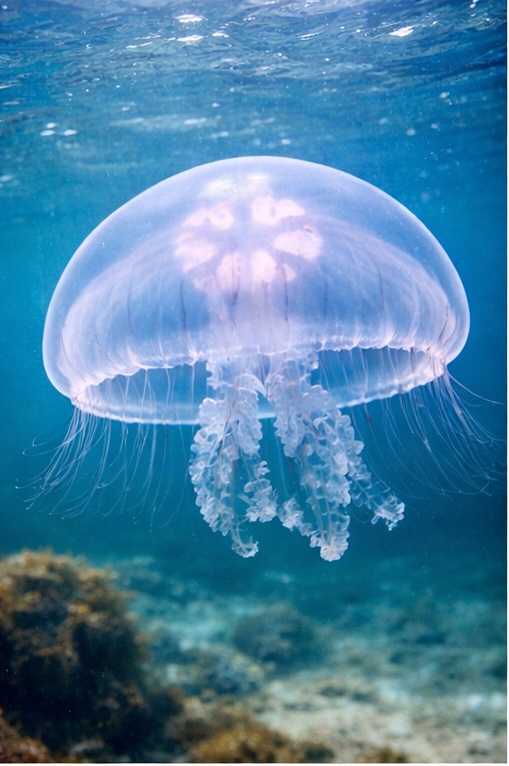
The moon jellyfish is probably the jellyfish people see most often around Bridlington. It’s easily identified by its clear, saucer-shaped body and the four faint rings visible in the centre.
Moon jellyfish are almost completely harmless. Their sting is very mild and often not felt at all. They drift slowly and are more captivating than threatening, especially when seen in clear water.
Compass jellyfish – striking but manageable: Jellyfish on Yorkshire Coast
The compass jellyfish is more colourful, with brownish markings that resemble compass roses. It looks far more dramatic than the moon jellyfish and can give a stronger sting if touched.
That said, compass jellyfish are not aggressive. They don’t chase swimmers and will usually drift past unnoticed. Most problems only occur if someone brushes against the tentacles by accident.
Avoiding direct contact is all that’s needed.
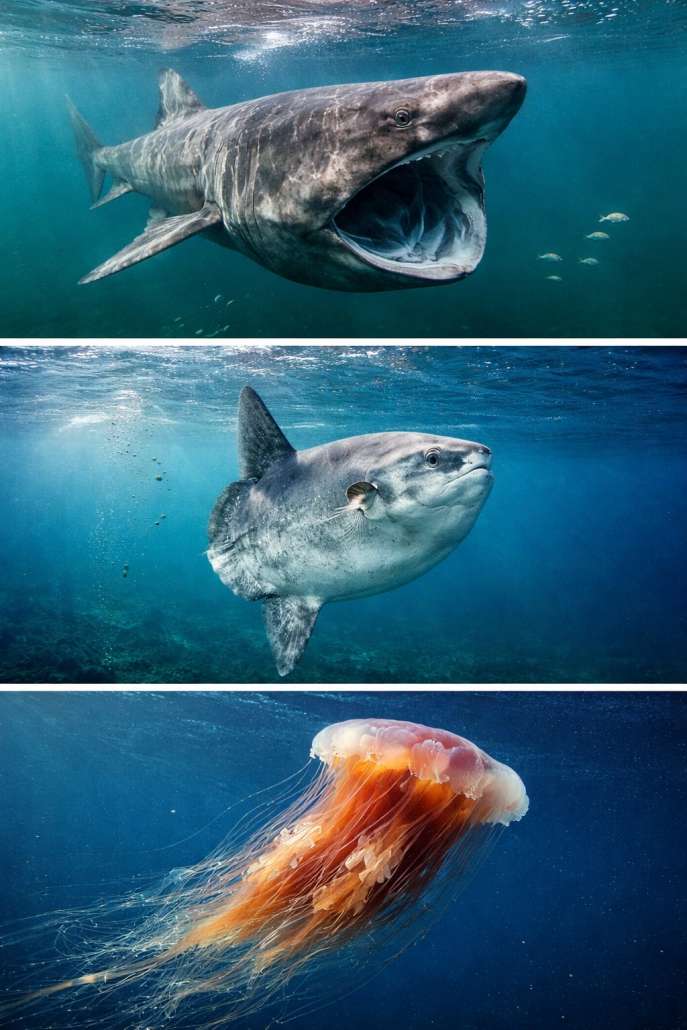
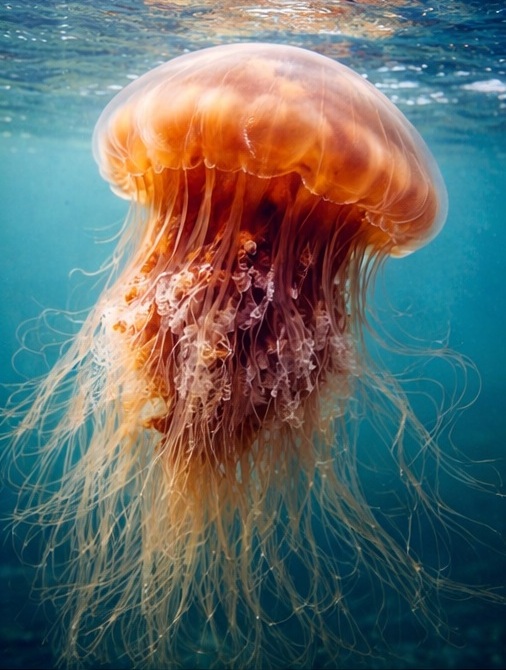
The impressive lion’s mane jellyfish is best appreciated from a distance.
The lion’s mane jellyfish is the largest jellyfish species found in UK waters and certainly the most eye-catching. Its long trailing tentacles and reddish-brown colouring make it look intimidating.
While its sting can be painful, encounters are rare, and these jellyfish usually stay further offshore. Occasionally they wash up on beaches after storms or strong tides.
Even when washed up, their tentacles can still sting, so they should never be touched. Admiring them from a safe distance is the sensible approach.
Jellyfish on the beach – what to do: Jellyfish on Yorkshire Coast
Finding a jellyfish on the sand can be fascinating, especially for children. The key thing to remember is never to touch jellyfish, even if they look dry or lifeless.
If you come across one:
- Keep your distance
- Warn children not to touch it
- Don’t poke it with sticks or hands
- Let the tide and nature take care of it
Most jellyfish will eventually be washed back out to sea or break down naturally.
What to do if you’re stung
Jellyfish stings around the Yorkshire coast are uncommon and usually mild. If someone is stung:
- Rinse the area with seawater, not fresh water
- Carefully remove any tentacles using something solid (not fingers)
- Avoid rubbing the area
- Seek medical advice if the reaction is severe or doesn’t improve
Most stings settle quickly and are more uncomfortable than dangerous.
Why jellyfish aren’t a bad sign: Jellyfish on Yorkshire Coast
Jellyfish are often misunderstood. Their presence doesn’t mean the sea is unsafe or polluted. In fact, they’re part of a healthy marine ecosystem and have existed for millions of years.
They feed on plankton and small organisms and, in turn, are eaten by fish, turtles, and even sunfish. Their appearance is simply a reminder that the sea is full of life.
Enjoy the coast with confidence.
Understanding what you’re seeing makes all the difference. Jellyfish are not something to fear — just something to respect.
For visitors enjoying the beaches and coastline around Bridlington, knowing a little about local marine life adds interest rather than worry. Rock pools, shoreline walks, and time spent watching the sea become more engaging when you recognise what’s drifting by.
The Yorkshire coast has its surprises, but most of them are gentle ones — and jellyfish are a perfect example.
At Lucky Paws Holiday Home, we believe holidays should be unhurried and peaceful. Our caravan near Flamborough and Bridlington offers a comfortable place to unwind, enjoy coastal scenery, and experience the Yorkshire coast away from the crowds.